Bleeding gums when you brush? What it means and the 2-week fix
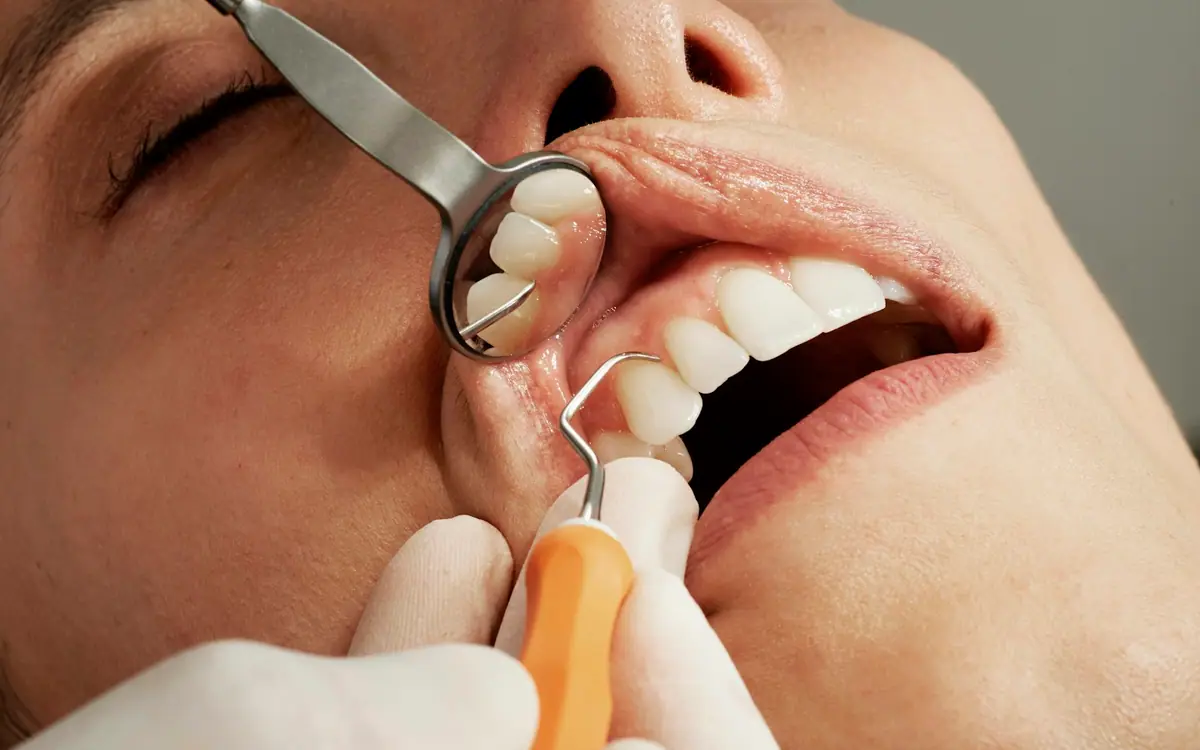
Quick answer: Gums that bleed when you brush are usually showing gingivitis, early gum inflammation caused by plaque left at the gum line. It's common, painless and fully reversible. Gentle brushing at the gum line plus cleaning between your teeth once a day usually stops the bleeding within one to two weeks. If it doesn't, see a dentist.
Most people react to bleeding gums by brushing that area less. That's exactly backwards. The bleeding is a sign that plaque bacteria have been sitting there too long, and the fix is to clean that spot more carefully, not less.
Why gums bleed
Plaque is a soft, sticky film of bacteria that builds up every day where your teeth meet your gums. Left for a few days, it inflames the gums: they turn red, puff up slightly and bleed at the lightest touch. Left for months, plaque hardens into tartar, which only a dentist can remove, and the inflammation can spread deeper into periodontitis, where the bone around the teeth is slowly lost.
- Gingivitis (early): bleeding, redness, puffiness. Fully reversible.
- Periodontitis (advanced): gums pull back, teeth look longer or feel loose. Damage can be stopped but not undone.
Why it matters beyond your mouth
Inflamed gums are linked with conditions elsewhere in the body. The strongest link is with diabetes, and it works both ways: high blood sugar makes gum disease worse, and gum disease makes blood sugar harder to control. Trials show that treating gum disease can lower HbA1c by around 0.4 percentage points. Gum disease is also linked with heart disease and with problems in pregnancy, though those links aren't proven to be cause and effect.
The 2-week fix
- Use a soft brush, not a hard one. Scrubbing hurts gums without cleaning better.
- Angle it at 45 degrees toward the gum line and use small, gentle circles, two or three teeth at a time.
- Brush for two full minutes, morning and night, including the inside surfaces most people skip.
- Clean between your teeth once a day, at night. Interdental brushes have the best evidence; floss works for tight gaps.
- Spit, don't rinse, so the fluoride stays on your teeth.
- Keep sugar to mealtimes. Sweet chai sipped through the day keeps plaque bacteria fed for hours.
Expect a little more bleeding in the first few days as you clean areas you've been missing. That's normal. Keep going gently; most people see a clear difference within a week or two.
When it's more than gingivitis
See a dentist if bleeding hasn't stopped after two weeks of good cleaning, or straight away if you notice receding gums, loose teeth, pus, a bad taste that won't go, or swelling. Book a professional cleaning anyway if it's been more than a year: home care can't remove tartar.
Two other things to know. Smokers and tobacco users often see little bleeding even with serious gum disease, because nicotine narrows blood vessels and hides the warning sign. And if your gums bleed easily along with unusual bruising, nosebleeds or tiredness, see a doctor, as that can have causes outside the mouth.
Medical Disclaimer: This content is for general health information only. Always consult a qualified healthcare professional for medical advice.
Want the full guide?
This article is a preview. The e-books go a lot deeper.